
Laser Treatments: Improving Skin Texture and Clarity
Laser treatments offer one of the most clinically significant approaches to improving skin texture, tone, and quality — producing results that more superficial treatments are often unable to match. At Dr Marian’s practice, laser treatment means CO₂ laser resurfacing: a well-established, evidence-based procedure that addresses concerns including fine lines, acne scarring, hyperpigmentation, and uneven skin texture by stimulating the skin’s own repair and collagen production processes.
Laser treatment is not for every patient or every concern. It requires careful assessment, realistic expectations, and a recovery period that needs to be planned for. But for the right patient, it offers a level of structural skin improvement that is difficult to achieve through any other non-surgical approach. This page explains how it works, what to expect, and how to know whether it might be appropriate for you.
What Is Laser Skin Treatment?
Laser skin treatments use focused light energy to create a controlled response within the skin. Different types of laser work at different wavelengths and depths, which determines what they treat and how the skin responds. The CO₂ laser used at this practice operates on a wavelength that is specifically absorbed by water in the skin cells — allowing it to precisely target and remove damaged surface and mid-dermal tissue while stimulating regeneration beneath.
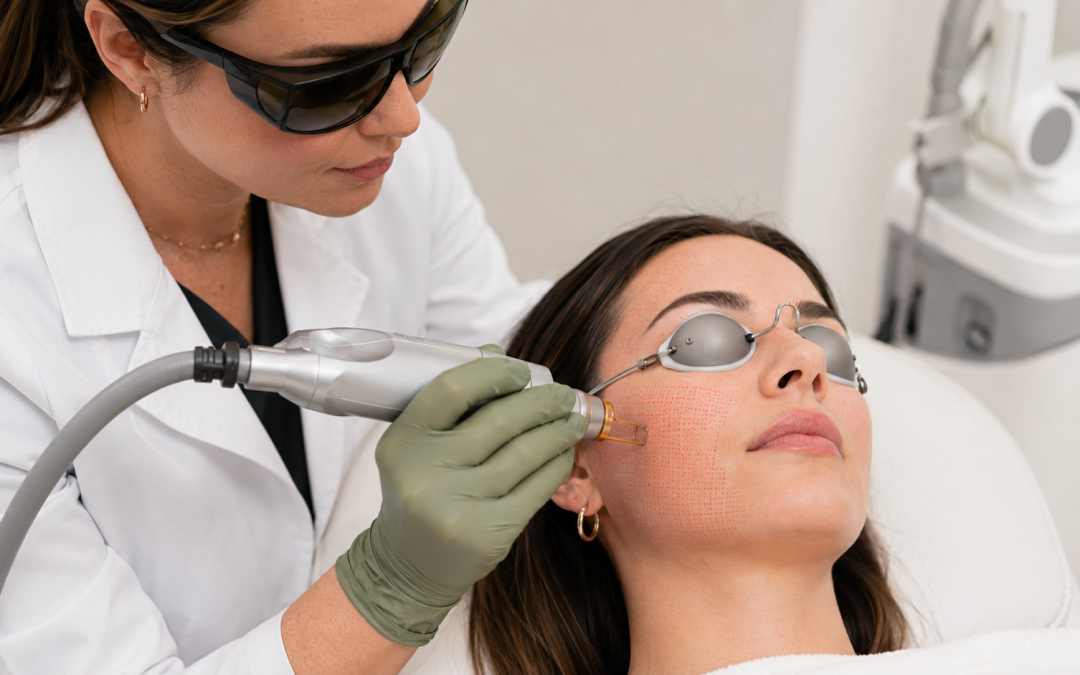
The treatment is delivered in a fractional pattern, meaning the laser treats thousands of microscopic columns within the skin rather than the entire surface at once. This fractional approach leaves surrounding tissue intact, which preserves the skin’s ability to heal efficiently and reduces recovery time compared to fully ablative techniques — while still delivering meaningful depth and stimulation.
How CO₂ Laser Treatment Works
The CO₂ laser creates controlled micro-injuries in the skin that trigger the body’s natural wound-healing response. As the skin repairs itself, it produces new collagen and elastin — replacing older, damaged tissue with structurally stronger, more even skin. This dual action — removal of the damaged surface and stimulation of new tissue beneath — is what gives CO₂ laser its capacity for significant and lasting results.
The depth and density of the treatment are adjustable, which allows the approach to be tailored to the individual’s skin concern, skin type, and tolerance for downtime. Superficial settings produce lighter results with less recovery. Deeper settings address more significant concerns such as acne scarring or deep lines, but require a longer and more managed healing period. Selecting the right settings for the right patient is one of the most important parts of achieving a good outcome safely.
What CO₂ Laser Can Treat
- Fine lines and wrinkles: Particularly effective around the eyes, mouth, and forehead, where repeated expression and collagen loss have created surface lines and creping
- Acne scarring: Fractional CO₂ is one of the most effective treatments for atrophic (depressed) acne scars, where the laser encourages the skin to remodel from within and gradually improve surface irregularity
- Hyperpigmentation and sun damage: UV-related pigmentation, sun spots, and uneven skin tone respond well to CO₂ resurfacing as damaged surface cells are removed and replaced by newer, more evenly pigmented tissue
- Uneven skin texture: Surface irregularities caused by years of environmental exposure, previous skin conditions, or uneven cell turnover are significantly improved as the skin renews
- Skin laxity: The collagen stimulation produced by CO₂ laser also contributes to improved firmness and tightening over time, particularly in areas of mild to moderate laxity
Not every skin concern is best addressed by laser, and not every patient is a suitable candidate. A thorough assessment is essential before any recommendation is made. View CO₂ Laser Treatment on the services page →
What to Expect: Healing and Downtime
CO₂ laser is a results-driven treatment, but it is also one where the recovery period is a meaningful part of the process. Understanding what to expect at each stage — and planning for it properly — is essential to a good outcome. Patients who manage their recovery well consistently achieve better results than those who do not.
- Days 1–3: Redness, swelling, and a sensation similar to sunburn. The skin feels tight and warm. This is a normal inflammatory response — the healing process has begun
- Days 4–7: Peeling and flaking as the treated surface sheds and new skin emerges. This should not be forced or picked at, as doing so affects the final result
- Weeks 2–4: The skin surface settles and redness gradually fades. Collagen remodelling continues beneath the surface
- Months 1–3: Progressive improvement in texture, tone, and firmness as new collagen matures. The full result is typically visible at around three months
Downtime ranges from 3 to 14 days depending on treatment depth — most patients feel comfortable in social settings within five to seven days for lighter treatments, and ten to fourteen days for deeper ones. Precise downtime expectations will be discussed based on your specific treatment plan. Read the full CO₂ laser guide including healing stages →
Patient Selection and Assessment
CO₂ laser is one of the treatments where the consultation matters most. Skin type is a critical factor — patients with darker Fitzpatrick skin tones face a higher risk of post-inflammatory hyperpigmentation following laser treatment, and this needs to be assessed and planned for carefully, sometimes with a preparatory skincare protocol in the weeks before treatment.
Medical history, current medications, history of cold sores in or near the treatment area, recent sun exposure, and previous skin treatments all form part of the pre-treatment assessment. Laser is also contraindicated in certain circumstances — active skin infections, some inflammatory skin conditions, and pregnancy among them.
The purpose of a thorough assessment is not to create barriers, but to ensure that if treatment goes ahead, it is done safely and with the highest likelihood of a good outcome. CO₂ laser is a powerful tool — and like all powerful tools, its value depends on being used thoughtfully.
Laser Treatments and Regenerative Support
CO₂ laser is sometimes combined with or followed by regenerative treatments to support the healing process and enhance outcomes. Polynucleotides, for example, are well suited to the recovery period following laser resurfacing — they support tissue repair, improve hydration, and can help the skin rebuild more effectively in the weeks after treatment.
A combination approach of this kind is not always necessary, but for patients whose skin needs additional support during recovery, or who want to maximise the regenerative benefit of the treatment, it is worth discussing during the consultation. Learn more about regenerative treatments →
Risks and Considerations
As with any medical procedure, CO₂ laser carries risks that should be understood before treatment begins. Possible side effects include prolonged redness, post-inflammatory hyperpigmentation, infection, and — in rare cases — scarring. Most of these risks are significantly reduced by thorough pre-treatment assessment, appropriate aftercare, and sun protection during the recovery period.
All risks will be discussed in full during your consultation. CO₂ laser is a treatment I approach with a high level of care and planning — proper preparation and realistic expectations are as important as the treatment itself.
Is This Right for You?
CO₂ laser may be worth considering if you have concerns about skin texture, acne scarring, pigmentation, or fine lines that have not responded well to lighter treatments, and if you are able to commit to the recovery period that the treatment requires. It is not the right choice for every patient, and for some concerns a different approach — regenerative treatments, skin boosters, or medical-grade skincare — may be more appropriate.
If you would like to understand whether CO₂ laser is appropriate for your skin, a consultation is the right starting point. Book a consultation here →
Articles by DrMarian
CO2 Laser Treatment: Benefits, Healing & Downtime
CO2 laser is one of the most results-driven treatments available for skin texture and pigmentation — but it is also one where preparation and recovery matter as much as the treatment itself. If you are considering it, understanding what to realistically expect at each stage helps you make the decision with confidence rather than uncertainty.