
What Is CO2 Laser Treatment and What Are the Benefits, Healing Time, and Downtime?
CO2 laser treatment is an advanced option for improving skin texture, fine lines, pigmentation, and overall skin quality. It is one of the most clinically established resurfacing treatments available and, when performed correctly with appropriate aftercare, can produce significant and lasting improvements — particularly for patients who have not achieved the results they wanted from lighter treatments.
What Is CO2 Laser Treatment?
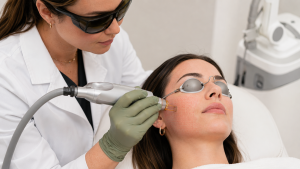
A fractional laser that removes damaged skin layers while stimulating repair, collagen production, and improved skin clarity. The term “fractional” means the laser treats thousands of microscopic columns within the skin, leaving surrounding tissue intact. This approach preserves the skin’s ability to heal efficiently while still creating a meaningful level of controlled injury that drives regeneration.
CO2 lasers operate on a specific wavelength that is absorbed by water in the skin cells, which allows them to precisely target and remove superficial and mid-dermal layers of damaged tissue. The result is a dual action: removal of the old, damaged surface and stimulation of new collagen formation beneath it.
How Does It Work?
It creates controlled heat in the skin, triggering natural healing, collagen renewal, and increased cell turnover to improve texture and pigmentation. As the skin heals over the following days and weeks, it replaces the treated tissue with newer, more structurally sound skin — smoother in texture, more even in tone, and firmer due to increased collagen.
The depth and density of the treatment can be adjusted depending on the concern being addressed. Superficial settings produce less downtime but more gradual results. Deeper settings treat more significant scarring, lines, or pigmentation but require a longer and more managed recovery period.
Quick Answer
CO2 laser treatment improves skin texture, reduces lines, and helps fade hyperpigmentation by stimulating collagen and skin renewal. It delivers noticeable results but requires downtime for proper healing and recovery.
Benefits
- Smoother skin texture: By removing the outermost layers of damaged skin and stimulating collagen, the surface becomes noticeably more refined over time
- Reduced wrinkles: Fine lines and superficial wrinkles respond well to CO2 resurfacing, particularly around the eyes, mouth, and forehead
- Improved acne scarring: Fractional CO2 is one of the most effective treatments for atrophic (depressed) acne scars, where it encourages the skin to remodel from within
- More even skin tone: Uneven pigmentation, sun damage, and areas of dullness are significantly improved as new skin cells replace old ones
- Reduction in hyperpigmentation: Pigmented lesions and areas of post-inflammatory pigmentation can be reduced, though careful assessment is needed for darker skin tones
The most appropriate settings and treatment plan depend on your skin type, the concern being addressed, and how much downtime you are able to accommodate. This is something I will assess carefully before recommending a specific approach.
What Affects Results?
Results depend on treatment depth, skin type, degree of pigmentation or scarring, aftercare, and overall skin condition. Patients who follow post-treatment instructions carefully, protect their skin from sun exposure, and maintain a consistent skincare routine in the weeks following treatment tend to achieve better and more lasting outcomes.
Skin tone is also an important consideration. Patients with darker Fitzpatrick skin types face a higher risk of post-inflammatory hyperpigmentation following laser treatment. A thorough skin assessment and, in some cases, a preparatory skincare protocol before treatment can significantly reduce this risk.
Healing Process
Healing progresses from redness and peeling in the first week to deeper collagen regeneration over several weeks, with gradual improvement in tone and pigmentation. The stages typically follow this pattern:
- Days 1–3: Redness, swelling, and a sensation similar to sunburn. The skin may feel tight and warm. This is a normal inflammatory response and a sign that the healing process has begun
- Days 4–7: Peeling and flaking as the treated surface sheds and new skin begins to emerge. It is important not to pick or force this process, as doing so can affect the final result and increase the risk of scarring
- Weeks 2–4: The surface appears smoother and pinker. Redness gradually fades. Collagen remodelling continues beneath the surface, even if it is not yet visible
- Months 1–3: Progressive improvement in texture, tone, and firmness as new collagen matures. The full result is typically visible at around three months post-treatment
Downtime
Downtime ranges from 3–14 days depending on treatment intensity, with redness sometimes lasting longer. For superficial settings, most patients feel comfortable returning to daily activities within five to seven days, though some residual redness may remain. For deeper treatments, a recovery period of ten to fourteen days is more realistic before the skin feels presentable without significant coverage.
Planning your schedule around the recovery window is an important part of preparing for this treatment. I will give you a clear expectation of what your specific downtime is likely to look like based on the settings we use.
Risks
Possible side effects include redness, sensitivity, and temporary pigmentation changes, including post-inflammatory hyperpigmentation. Other considerations include:
- Prolonged redness: In some patients, particularly those with sensitive or reactive skin, redness can persist for several weeks beyond the initial healing phase
- Post-inflammatory hyperpigmentation (PIH): Temporary darkening of the skin in the treated area, more common in darker skin tones and usually manageable with appropriate aftercare
- Infection risk: Low but present, particularly if aftercare instructions are not followed. Antiviral medication may be recommended if you have a history of cold sores in or near the treatment area
All risks will be discussed with you thoroughly during your consultation. CO2 laser is a powerful treatment and one that I approach with a high level of care and planning, not something that should be undertaken without proper assessment.
Conclusion
A structured, results-driven treatment that improves texture and pigmentation but requires careful recovery and aftercare. CO2 laser is not the right choice for every patient or every concern — but for those where it is appropriate, it offers a level of improvement that lighter treatments are unlikely to match. The key is proper assessment, realistic expectations, and a recovery plan that you can genuinely commit to.